Table of Contents
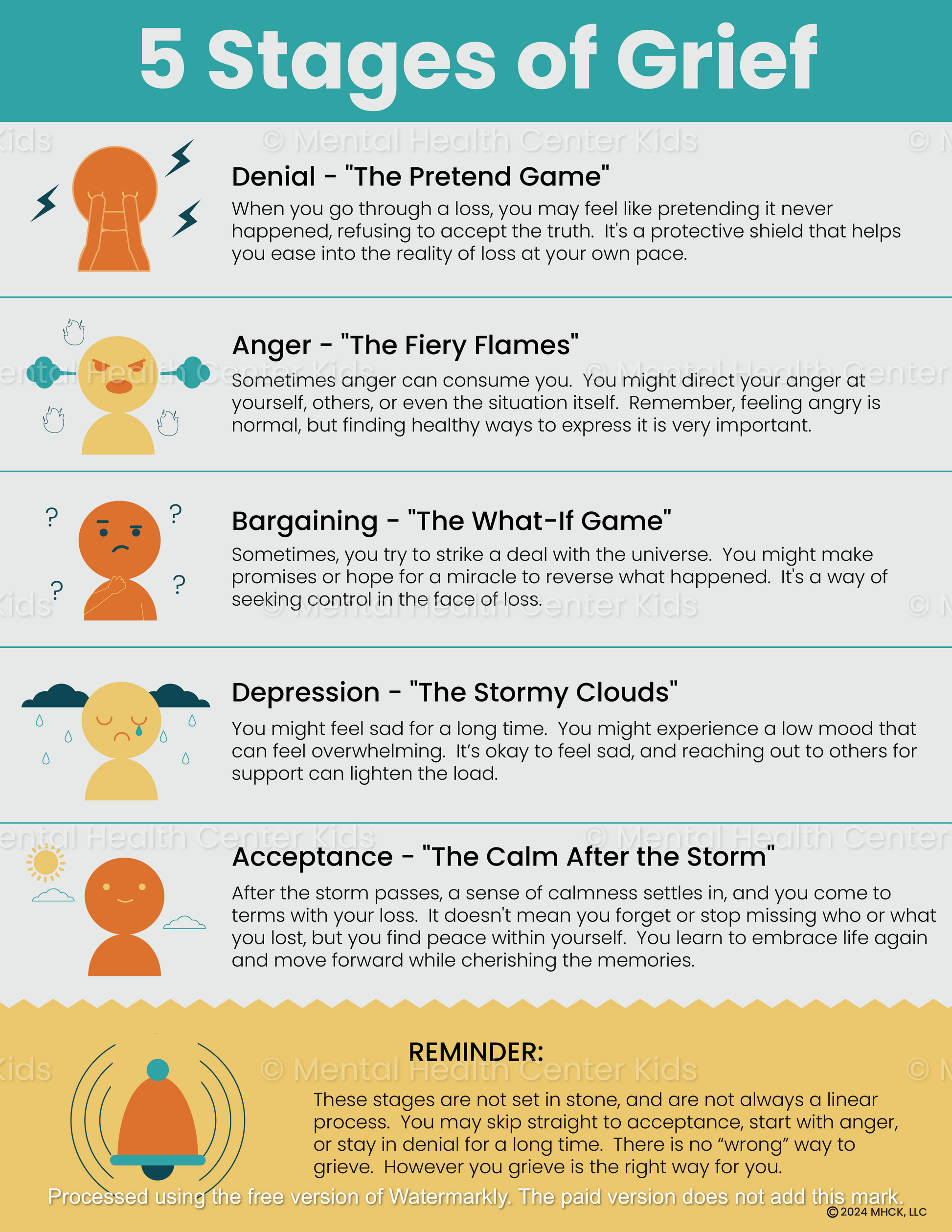
Grief is a complicated procedure that varies from one person to another. The 5 stages of pain denial, anger, negotiating, depression, and approval are a handy framework for considering pain, yet it doesn't indicate we'll go through every phase. We can experience these facets of grief at different times, and they don't happen in one certain order.
This site utilizes cookies to help personalise content, customize your experience and to keep you visited if you register. By remaining to utilize this site, you are consenting to our use cookies.
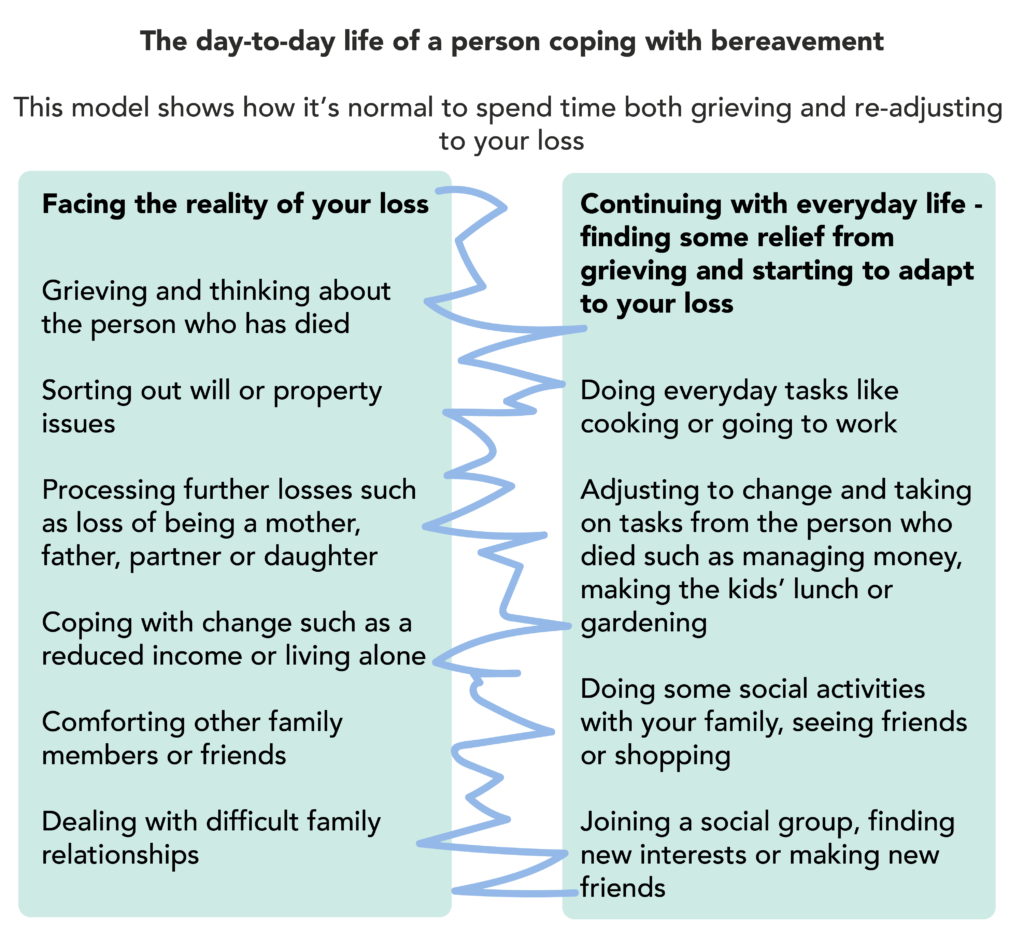
The 7 phases of despair are a design template for exactly how a person may grieve. This cyclical framework is implied to help you much better recognize your sensations and is not meant to recommend how you ought to regret, what you should be sensation, or in which order. Every person grieves in a different way. Each phase may reoccur or overlap the others.
If you 'd like to find out even more about your individual grieving procedure, it's an excellent idea to connect to a trusted psychological health specialist to comprehend yourself far better and create appropriate coping methods. Discover more about the seven phases of pain. Sorrow can be a difficult and untidy procedure. When a loss happens, among the first things you may experience is shock.
How EMDR Sessions Brings for Healthcare Workers in Los Angeles
That's because nobody can ever before be really planned for a loss so substantial. Consequently, when you remain in shock after a loss, you might behave typically or just as if nothing has happened. Most of the time, this is due to the fact that your body has actually not processed the loss. You may feel like the scenario hasn't "sunk in" just.
These sensations and experiences are self-protective mechanisms that act as a buffer so that you are not bewildered at one time. Because the death of an enjoyed one can have such a significant influence on you, you may experience rejection. Throughout this stage of grief, it is simply also hard for your brain to comprehend that your relative, pal, or other liked one is gone.
As you slowly begin to accept the loss and what it implies for your life now, your denial will begin to decrease. You might have a wider variety of feelings and emotions when rejection wears away. Until then, you may have durations when you really feel troubled, which can be set off by reminders of your loved one.
Sometimes, it's a regular feeling to desire to prevent others so that you do not have to recognize or review your loss. Sometimes, you feel forgetful, obtain quickly sidetracked, or postpone throughout this stage of sorrow. You might additionally try to stay hectic constantly or closed down psychologically.
Self-Compassion for Perfectionists
In certain situations, you might also feel upset with the doctor, your friends, member of the family, God, or any other soul(s) you think in. Under all that rage is your pain. While it might be uncomfortable to manage, it gives much more structure to your mourning than continuing to be numb.
Throughout this stage, individuals frequently feel powerless and helpless and ask themselves "suppose" inquiries. You may really feel guilty for refraining from doing even more to keep the loss from occurring or for not spending more time with the individual you shed. Throughout the negotiating phase, it prevails to ask yourself or claim, "I should have done this ..." or "If I had only done that ..." While these sorts of questions are typical, they are not where you want your thought process to stay.
Stress Threshold: Widening Your Resilience Through Therapy
Rather, try thinking of any type of excellent memories you have with them. Occasionally, just mirroring on these ideas can help you release the guilt. It may additionally be helpful to do something specific, like create a letter to your liked one or talk with them out loud. When you come to terms with the truth of the loss, a much deeper degree of despair might begin to slip in.
You can likewise see for a list of additional resources or call the number below to reach Drug abuse and Mental Health Services Administration (SAMHSA) hotline. The testing stage of the grieving process commonly includes experimenting with various points that help you relocate ahead. In this stage, you are beginning to construct your brand-new regular in addition to processing your sensations and feelings developed by the loss.
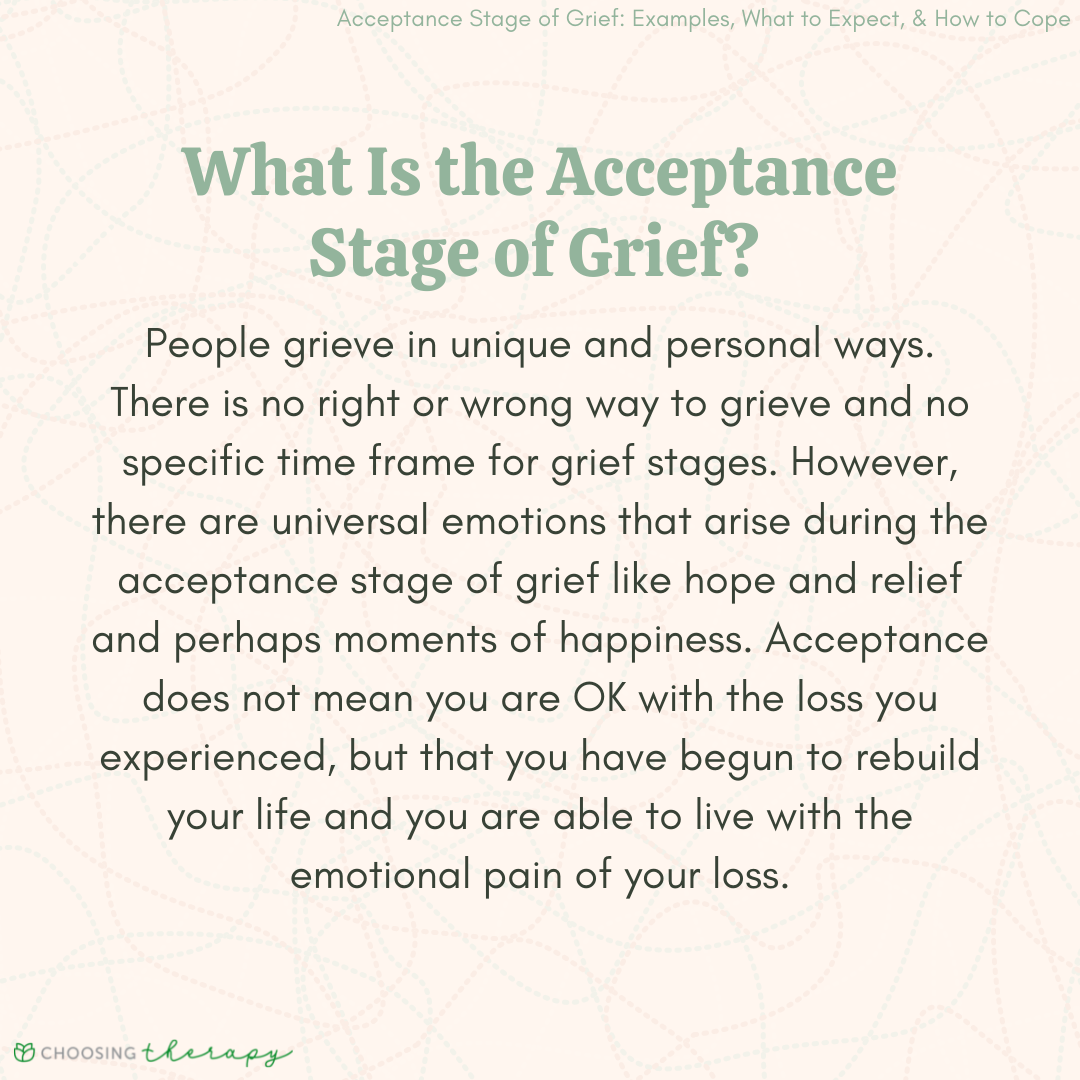
Getting to the acceptance stage does not suggest you are OK with what happened. Rather, this component of the grieving procedure is much more concerning approving what your life looks like currently. You will still require to listen to your feelings and readjust, but you will certainly start to really feel more wholeeven if it looks various than it did previously.

Table of Contents
Latest Posts
Virtual Counseling and Therapeutic Services: Expanding Opportunities to Support in Modern Practice
The Role of Therapeutic Alliance in Psychoanalytic Practice for Healing
How Trauma Influences Your Mind
Navigation
Latest Posts
Virtual Counseling and Therapeutic Services: Expanding Opportunities to Support in Modern Practice
The Role of Therapeutic Alliance in Psychoanalytic Practice for Healing
How Trauma Influences Your Mind